
Safe and discreet
Login / Register

Login / Register

Free shipping from €50 (NL) or €250 (International)

Sale       Outlet        FAQ

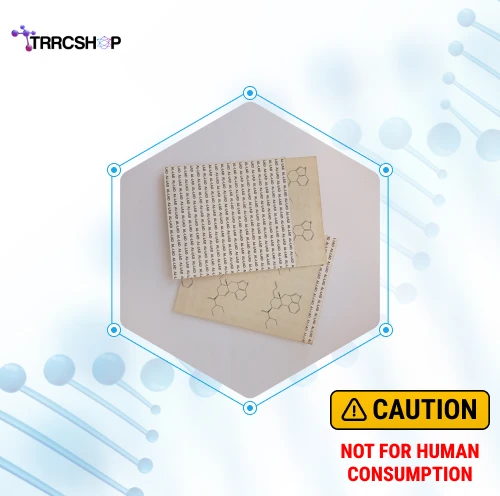
AL-LAD blotters 150mcg trrcshop

Not suitable for humans, animals or other consumption

AL-LAD blotters 150mcg

Price range: €6,95 through €895,95

AL-LAD

Synonym: 6-allyl-6-nor-LSD
CAS Number: 65527-61-9
IUPAC: (8β)-N,N-diethyl-6-(prop-2-en-1-yl)-9,10-didehydroergoline-8-carboxamide hemi-L-tartrate
Formula: C22H27N3O
Molar mass: 349.478 g/mol
Purity: >97%

SKU: allad-150mcg-1blotCategories: Blotters

AL-LAD 150mcg Blotters

AL-LAD is a substance that is only sold for research purposes and is therefore not intended for consumption.

AL-LAD remains stable for up to 2 years when stored in the right environment. AL-LAD is intended for research purposes and not for human consumption. Therefore, it is important to store the product out of the reach of children and pets.

Hazard statement

AL-LAD may cause airway irritation
AL-LAD may cause eye irritation.
Discharging research chemicals into the environment is prohibited.

IF IN EYES: Rinse eyes gently with water for five minutes. Remove contact lenses, if present and easy to do.

AL-LAD IN CONTACT WITH SKIN: Wash skin with soap and water.

IF INHALED OF AL-LAD: Remove victim to fresh air and keep in a position comfortable for breathing.

AL-LAD

Synonym: 6-allyl-6-nor-LSD
CAS Number: 65527-61-9
IUPAC: (8β)-N,N-diethyl-6-(prop-2-en-1-yl)-9,10-didehydroergoline-8-carboxamide hemi-L-tartrate
Formula: C22H27N3O
Molar mass: 349.478 g/mol
Purity: >97%

Hazard Warning

  • AL-LAD blotters 150mcg are research chemicals, meaning they are unknown substances. Therefore, there may be unknown effects during research. Always take appropriate precautions during research.
  • Research chemicals can cause respiratory irritation.
  • Research chemicals may cause eye irritation.
  • Research chemicals are not intended for consumption by humans, animals, or other living beings.
  • Research chemicals must not be poured into drains or disposed of incorrectly.

What to do if you or someone else is exposed to a research chemical:

  • In case of contact with eyes, rinse with water for at least 15 minutes.
  • In case of contact with skin, wash thoroughly with soap and water.
  • If inhaled, remove victim to fresh air immediately and keep in a position comfortable for breathing. If breathing difficulties persist, seek medical attention.
  • When in doubt, always seek medical advice.

How to conduct research:

  • Conduct research only in a professional environment and wear appropriate personal protective equipment such as gloves, safety glasses, lab coats, and respiratory protection if needed.
  • Do not expose to heat sources.
  • Please keep it in a dry environment at room temperature and store it in the proper packaging and out of reach of children and animals.
Quantity

1, 5, 10, 25, 50, 100, 250